As businesses grow, operations naturally become more complex. There are more transactions to manage, more customer expectations to meet, more staff to coordinate, and more decisions to make every day. Growth is a good sign, but for many SMEs, growth also brings a new kind of pressure. What once felt manageable begins to feel heavy.
In many cases, the problem is not a lack of effort. The team is working hard. The leaders are trying to move the business forward. But the tools and systems supporting the business have not grown at the same pace. This is where stress begins to build.
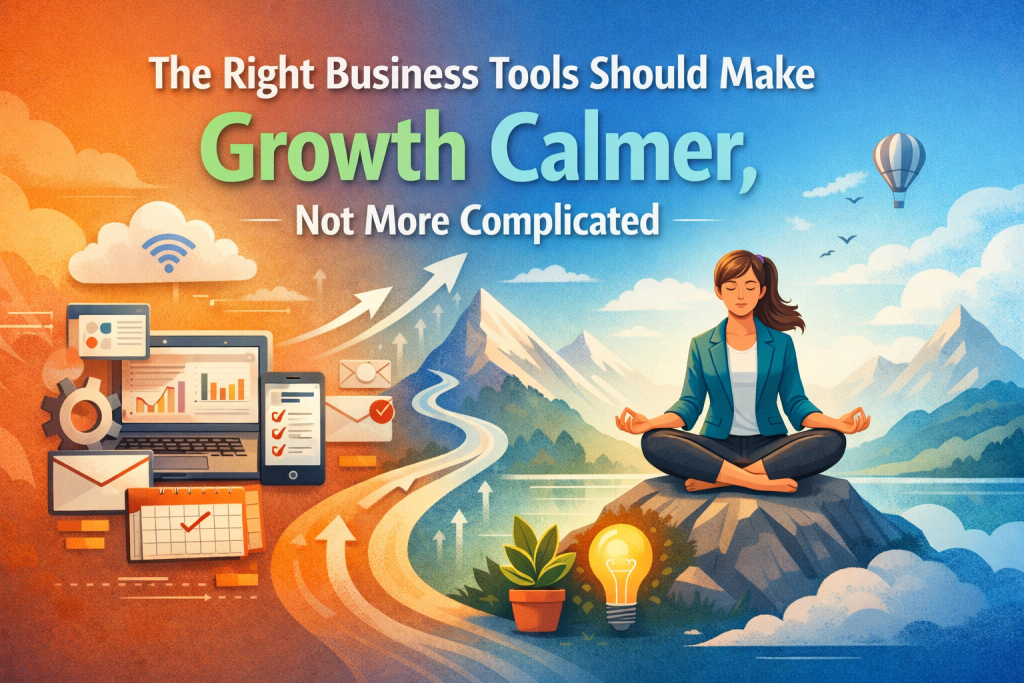
The right business tools should not add more complexity. They should reduce friction. They should make growth calmer, clearer, and easier to lead.
Growth Becomes Harder When Systems Stay Fragmented
In the early stages of a business, it is common to manage different functions separately. Sales may be tracked one way. Customer records may sit somewhere else. Financial reporting may depend on a different system or a set of spreadsheets. At first, this can seem manageable.
But as the business grows, disconnected systems begin to create hidden pressure. The same information is entered multiple times. Teams start relying on updates from one another rather than seeing the same data directly. Reporting becomes slower. Follow-up becomes less consistent. Leaders spend more time checking details than making decisions.
This is when growth starts to feel harder than it should.
The issue is not always that the business needs more manpower. Often, it needs better structure. It needs tools that help information flow more clearly and help the team operate with less effort and less confusion.
Good Tools Do More Than Save Time
When people think about business tools, they often think about automation, features, or software functions. But the real value goes deeper than that.
A good business tool improves clarity. It gives people better visibility into what is happening. It reduces duplicated work. It helps teams coordinate more smoothly. It supports faster and more confident decision-making.
The purpose of technology should never be just to look advanced. It should solve real business problems in a practical and sustainable way.
When the right tools are in place, leaders gain more confidence because they are no longer working through fragmented information. Staff can perform their roles with less uncertainty. Daily operations feel less reactive. The business becomes easier to manage.
Better Systems Support Better Leadership
Leadership becomes difficult when visibility is weak. When numbers are delayed, updates are inconsistent, and progress is hard to see, even experienced leaders are forced to make decisions with hesitation.
Strong systems help remove that burden.
When information is visible and reliable, leaders do not need to spend as much time chasing updates or reconciling reports. They can focus on planning, responding faster, and guiding the business with more clarity.
This is one of the biggest benefits of practical technology. It does not just support processes. It supports leadership itself.
A growing business should not feel like it is becoming harder to understand. With the right setup, it should feel more stable, more coordinated, and more ready for the next stage.
Practical Technology Matters More Than Impressive Technology
Not every tool creates meaningful value. Some businesses adopt systems because they feel pressure to modernise, or because a feature sounds impressive. But if the technology does not fit the real needs of the business, it can become another layer of complexity.
Practical technology is different.
Practical technology supports daily operations. It helps the team work more smoothly. It improves the quality of decisions. It reduces unnecessary manual work. It makes outcomes smarter and faster, not more confusing.
For SMEs, this matters a lot. A business does not need more tools for the sake of having more tools. It needs the right tools that fit the way the business works and the direction it is trying to go.
Signs Your Business May Need Better Tools
There are common warning signs that a business has outgrown its current setup.
One is when teams keep repeating manual work that should already be simplified. Another is when leadership finds it difficult to trust the numbers quickly. Other signs include missed follow-up, slow reporting, confusion across departments, and constant checking just to stay aligned.
These issues often look separate on the surface, but they usually point to the same underlying challenge: the business needs better visibility, better structure, and better support from its systems.
Growth Should Feel More Supported, Not More Stressful
The best business tools do not just help people work faster. They help businesses operate with more confidence.
They make it easier to manage complexity. They create smoother coordination between teams. They give leaders clearer information. They reduce unnecessary friction. They make growth feel more stable.
That is what good systems are meant to do.
Technology should not feel like another burden. It should feel like support.
If your business is growing but operations are becoming harder to manage, it may be time to look at whether the right tools are in place to support the next stage well.