

When should i hire an accountant?
Hiring an accountant can be a cost-effective way to manage your business finances. An accountant can guide you on tax planning and filing and help you stay organized and compliant with government regulations. Make sure to choose an accountant who is experienced in your industry and can provide sound advice based on your business needs. Get a quote from several accountants to get the best price for services rendered.
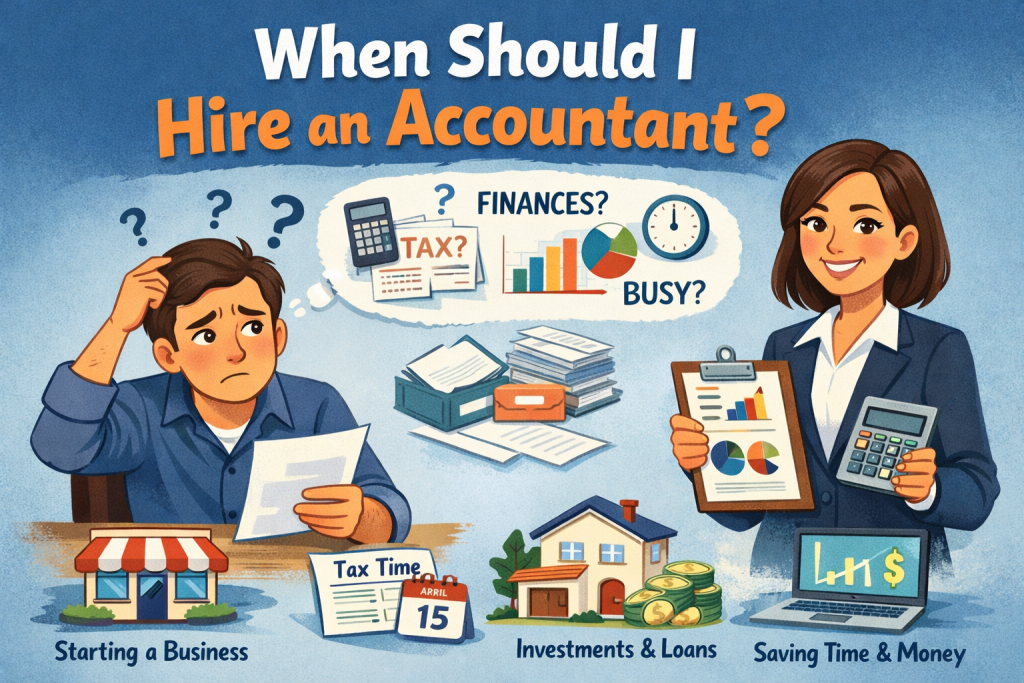
When should I hire an accountant?
- You will require an accountant to assist with the money.
- When you’re ready to delegate, get an accountant.
- When dealing with the government, hire an accountant.
- Employ an accountant; you’re subject to an audit.
- When you apply for a business loan or overdraft, you must have an accountant.
- Employ an accountant if your business is expanding.
- Before you invest in a franchise, seek the counsel of an accountant.
- Before purchasing a company, get the counsel of an accountant.
- When requesting a business loan, take into account an accountant’s competence.
- Employ an accountant to avoid common mistakes
1. You will require an accountant to assist with the moneyading Text Here
Should you hire an accountant to assist with the money? It is a question that can only answer by consulting a financial advisor. In general, it’s recommended that you consult with an accountant at some point during your business growth journey. Here’s why:
- Understanding your overall cash flow and balance sheet: One of the critical responsibilities of an accountant is providing comprehensive financial reporting and analysis. Understanding your ‘business’ current cash flow and balance sheet will better equip you to make informed decisions about future investments and expansion opportunities.
- Providing expert guidance: An accountant can advise on topics such as estate planning, tax planning, and charitable giving. This type of guidance can save you time and money by ensuring that your finances are in order before making crucial decisions.
- Assisting with business growth: When you’re growing your business, an accountant can provide valuable guidance and assistance to help ensure that your company is prepared for the future.
2. When you're ready to delegate, get an accountant.
There are a few things to keep in mind when it comes to delegating tasks:
- First, make sure you’re ready.
- Second, find someone who can do the job well.
- Third, make sure the task is worth the cost.
- Fourth, be clear about expectations and timelines.
- Fifth, set up reasonable benchmarks and review progress regularly.
- Sixth, communicate effectively and be open to feedback.
- Seventh, have an accountant on standby to help with taxes and other financial matters related to delegating tasks. Eighth, be prepared to give back and receive feedback in return.
3. When dealing with the government, hire an accountant.
There are a few things to remember when dealing with the government. One is to ensure you have an accountant on hand to help navigate all the regulations and paperwork involved. Hiring an accountant can help avoid any errors or complications down the road. You should take specific steps if you’re considering hiring one, like talking to a tax professional or reviewing your company’s accounting procedures. But no matter what stage you’re at, it’s always important to stay informed and plan.
4. Employ an accountant; you're subject to an audit
Are you subject to an audit? If so, it’s essential to have an accountant on your team. An accountant can help you navigate the audit process and ensure that your financial information is accurate. Here are three tips for hiring an accountant in the event of an audit:
- Consult with a Professional Firm: Most accountants are experienced in navigating audits, so it’s essential to consult a professional firm before making any decisions. A professional firm can advise you on whether or not an audit is likely and what steps you should take in preparation.
- Prepare a Financial Plan: Your accountant can help you prepare a financial plan according to your company’s audit guidelines. It will help ensure that all information is accurate and organized as required by auditors.
- Review Your Tax Returns: Most accountants will review your company’s tax documents to ensure they are as accurate as possible. While this may be time-consuming, you must have an accountant look over these documents before submitting them.
5. When you apply for a business loan or overdraft, you must have an accountant.
If you consider taking out a loan or overdraft to finance your business, you should have an accountant on your team. The accountant will help you complete the appropriate paperwork and ensure that your financial information is accurate. This step is important because bad financial records can hurt your chances of getting approved for a loan or overdraft. Overdrafts are a necessity for many small businesses. However, overdrafts can be a costly way to run your business. An overdraft is when you use more money than you have on deposit in your bank account.
6. Employ an accountant if your business is expanding.
Hiring an accountant is optional for all businesses, but it is a step to take if your business expands. By hiring an accountant, you will better understand your financial status and be in a better position to make decisions regarding future growth. Here are some factors to consider when deciding if an accountant is suitable for your business:
- Your company’s size: If your company is small, you don’t need an accountant. However, if your company is more significant or increasing, it may be worth considering hiring one.
- Your current financial situation: Do you know exactly where your money is going? Can you provide accurate annual reports? If not, an accountant can help you with that.
- Changes in regulations or tax laws: Are there any changes coming up that will affect your business? An accountant can help you prepare for these changes and ensure that you stay aware of the situation.
7. Before you invest in a franchise, seek the counsel of an accountant.
When you are thinking about investing in a franchise, it is essential to consult with an accountant. An accountant can help ensure that the franchise opportunity is a good fit for your business and financial needs. When choosing a franchise, there are many things to consider, including the franchisor’s track record, current and projected financial stability, and how much capital you will need to invest. An accountant can also guide how best to structure your investment and protect your long-term interests.
8. Before purchasing a company, get the counsel of an accountant.
Before purchasing a company, it is always a good idea to get the counsel of an accountant. An accountant can guide you when and how to hire an acc. There are pros and cons to hiring an accountant when purchasing a company. The main benefits include the following:
- The accountant can provide valuable insight into the company’s financial health and make recommendations on potential acquisitions or investments.
- The accountant can help protect the purchaser from any possible lawsuits that may arise from the purchase. By understanding the legal landscape, the purchaser can avoid any costly mistakes down the line.
- The accountant can help address the legal aspects of the purchase and explain any changes that may be needed in the future.
- The accountant can advise on how to best structure the deal to minimize tax liabilities.
9. When requesting a business loan, take into account an accountant's competence.
When requesting a business loan, it is essential to consider the competence of the accountant you are hiring. A competent accountant can help you analyze your financial statements and make sound decisions about your business. They can also provide advice on taxation and financing options. Make sure to find an accountant who understands your business, and its unique needs.
10. Employ an accountant to avoid common mistakes
Many small businesses make common mistakes when accounting for their finances, which can result in serious financial problems down the road. You can avoid many of these pitfalls by employing an accountant to help you manage your finances.
- One of the most common mistakes small businesses make is underestimating their expenses. You need to account for your costs to avoid quickly finding yourself in debt. An accountant can help you keep track of your spending so that you don’t end up in a hole.
- Another mistake small businesses make is not correctly budgeting for future expenses. If you don’t plan for what’s coming, you may find yourself faced with unexpected bills that you cannot afford to pay. An accountant can help create a budget that reflects your long-term goals and avoids unnecessary expenditures.
Final Thoughts
In conclusion, it is essential to have an accountant on staff whether you are a small business or a multinational corporation. There are many factors to consider when hiring an accountant, such as your company’s size and complexity, but hiring the right one is essential for any business. A good accountant can handle all the details of your business, including tax and legal issues. An accountant can help you make the most of your money, time, and resources by providing you with financial advice and helping you avoid costly mistakes.
