
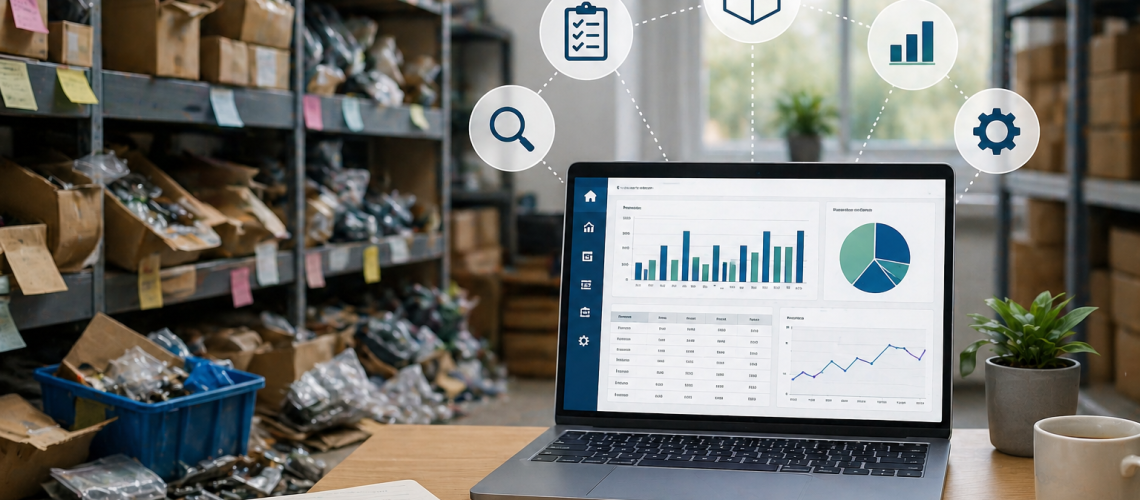
Many SMEs start with manual records or spreadsheets, but as operations grow, that process can become harder to manage
As a business grows, daily operations become more demanding. There are more sales to record, more purchases to track, more supplier and customer information to manage, and often more inventory to monitor. What once felt manageable with manual spreadsheets or scattered records can gradually become harder to control.
This is one reason many SMEs begin looking for a better way to manage their accounts and inventory.
Accounting and inventory software helps businesses work smarter by bringing important financial and operational records into one structured system. Instead of relying on multiple spreadsheets, handwritten notes, or disconnected files, businesses can manage key information in a more organized and efficient way.
For many SMEs, one of the biggest benefits is visibility. When sales, purchases, expenses, customer records, supplier details, and inventory are stored in one place, it becomes easier to see what is happening across the business. Teams can access information more quickly, reduce duplication, and avoid spending unnecessary time searching through different files.
Another major benefit is accuracy. Manual record-keeping often increases the risk of human error. Duplicate entries, missed updates, wrong formulas, and outdated versions of spreadsheets can all affect the quality of the information being used. A more structured system helps reduce these issues by making record-keeping more consistent and easier to maintain.
Accounting and inventory software also makes reporting easier. Businesses do not just need to store data. They need to use it. When records are properly organized, it becomes much faster to review sales, monitor expenses, check stock balances, and assess overall business performance. This saves time and also supports better decision-making.
For businesses that manage stock, inventory control is especially important. Poor inventory records can lead to over-ordering, under-ordering, stock mismatches, and difficulty understanding product movement. When inventory is recorded properly, businesses can monitor stock levels with more confidence and make better purchasing decisions.
This kind of software also helps improve day-to-day workflow. Instead of spending hours updating files manually, staff can work with a system designed to support routine processes more effectively. That does not just improve productivity. It also creates more time for business owners and teams to focus on planning, customer service, and growth.
Another important point is that the right software should not make things more complicated. For SMEs, a useful accounting and inventory system should be practical, easy to understand, and flexible enough to support the way the business operates. The goal is not to add complexity. The goal is to create more structure, better visibility, and smoother daily management.
As businesses expand, better systems become part of better business operations. Moving to a more structured accounting and inventory system is not just about technology. It is about creating a more reliable foundation for the business to grow.
For SMEs that want clearer records, easier reporting, and better operational control, the right accounting and inventory software can make a meaningful difference.
