

The Real Problem Businesses Face: Too Many Choices, Too Little Clarity
When business owners start taking cybersecurity seriously, they often face the same problem:
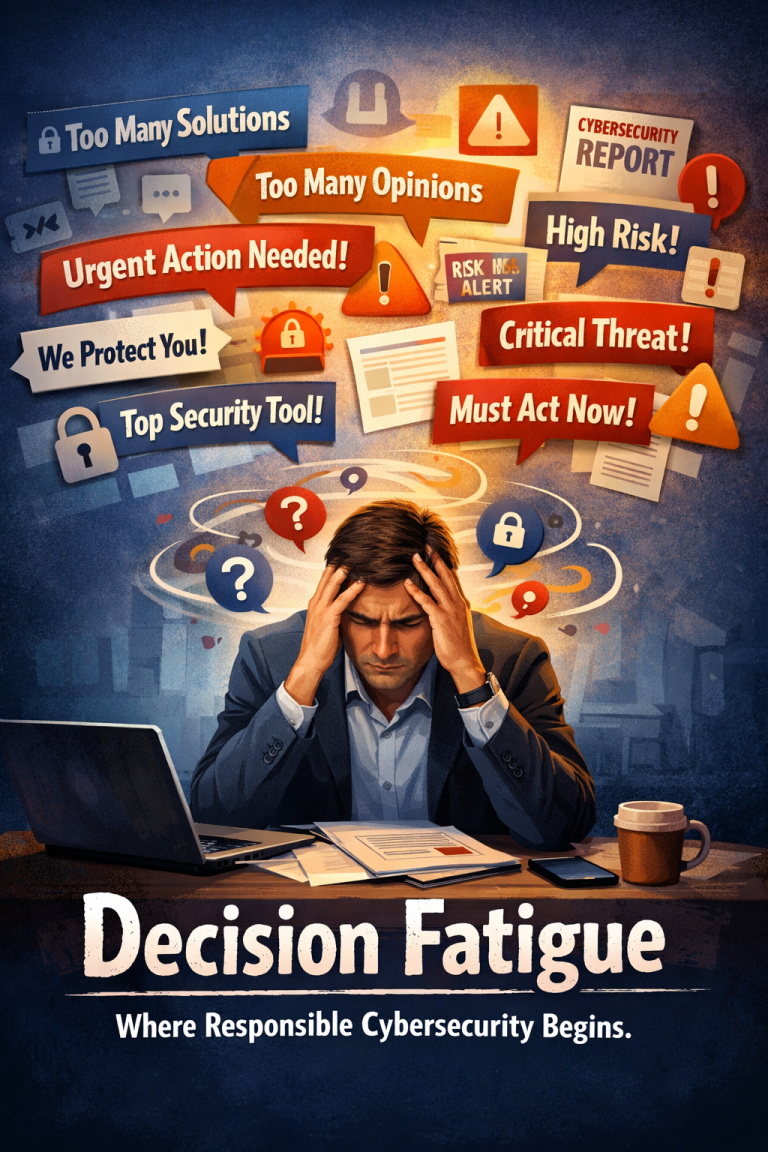
Too many solutions.
Too many opinions.
Too much urgency.
Every vendor promises protection.
Every article highlights risk.
Every recommendation sounds important.
The result is not confidence — it is decision fatigue. This is where responsible cybersecurity begins.
Why Acting Too Fast Can Increase Risk
One of the most common mistakes businesses make is implementing cybersecurity solutions before they are ready to manage them.
Examples we frequently see:
- Advanced security tools installed but not monitored
- Backup systems in place but never tested
- Alerts generated but ignored
- Staff confused about new processes
These businesses did not lack investment. They lacked readiness.
A Simple Framework: Are You Ready to Say “Yes” Yet?
Before adopting new cybersecurity tools or services, business leaders should be able to answer five simple questions:
1. Do we know what we are protecting first?
Not everything is equally important.
Ask:
- Which systems stop revenue if unavailable?
- Which data would cause the most damage if lost?
- Which processes cannot pause for more than one day?
If priorities are unclear, advanced tools will not help.
2. Do we know who owns decisions during an incident?
During disruption, delays often come from uncertainty.
Ask:
- Who decides what gets restored first?
- Who communicates with customers?
- Who approves emergency actions?
If ownership is unclear, complexity increases risk.
3. Can our team realistically maintain this solution?
Cybersecurity fails quietly when tools are too complex.
Ask:
- Who reviews alerts?
- Who updates configurations?
- Who understands the system well enough to act?
If the answer is “the vendor handles everything,” risk is being transferred, not managed.
4. Have we tested what we already have?
Many businesses already have protection — but no confidence.
Ask:
- When was the last recovery test?
- How long did it take?
- What failed?
- What surprised us?
Testing is one of the highest-value activities a business can do — and one of the most neglected.
5. Are we solving today’s problem or buying for fear?
Fear-driven decisions often lead to overbuying.
Ask:
- What specific risk are we addressing right now?
- Does this solution reduce that risk meaningfully?
- Can we explain this decision clearly to our team?
If the answer is unclear, “not yet” is often the safest response.
Why “Not Yet” Is a Responsible Business Decision
Saying “not yet” does not mean ignoring risk.
It means:
- Strengthening foundations first
- Building internal clarity
- Preparing the organisation to sustain protection
- Avoiding false confidence
Responsible cybersecurity grows with the business, not ahead of it.
Practical Actions Business Owners Can Take This Month
Here are concrete steps any business can take without buying anything:
- List your top three critical systems
- Assign incident decision ownership
- Schedule one backup or recovery test
- Ask your team: “What confuses you during an incident?”
- Document one-page response priorities
These actions alone reduce risk significantly.
